“The environmental crisis is an outward manifestation of a crisis of mind and spirit. [It is not] concerned only with endangered wildlife, human-made ugliness, and pollution. These are part of it, but more importantly, the crisis is concerned with the kind of creatures we are and what we must become in order to survive.”
– Lynton Caldwell, political scientist and architect of the 1969 US National Environmental Policy Act
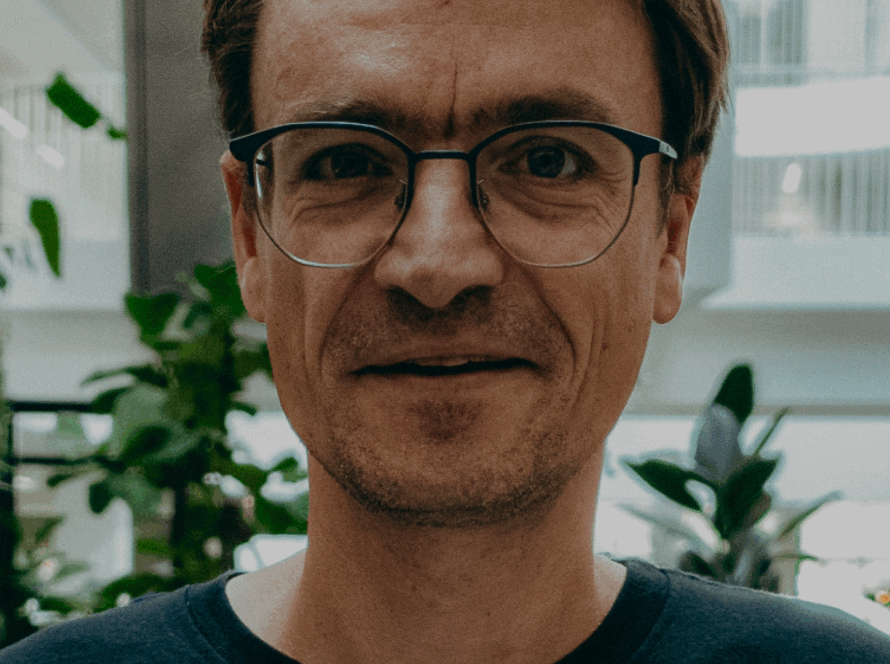
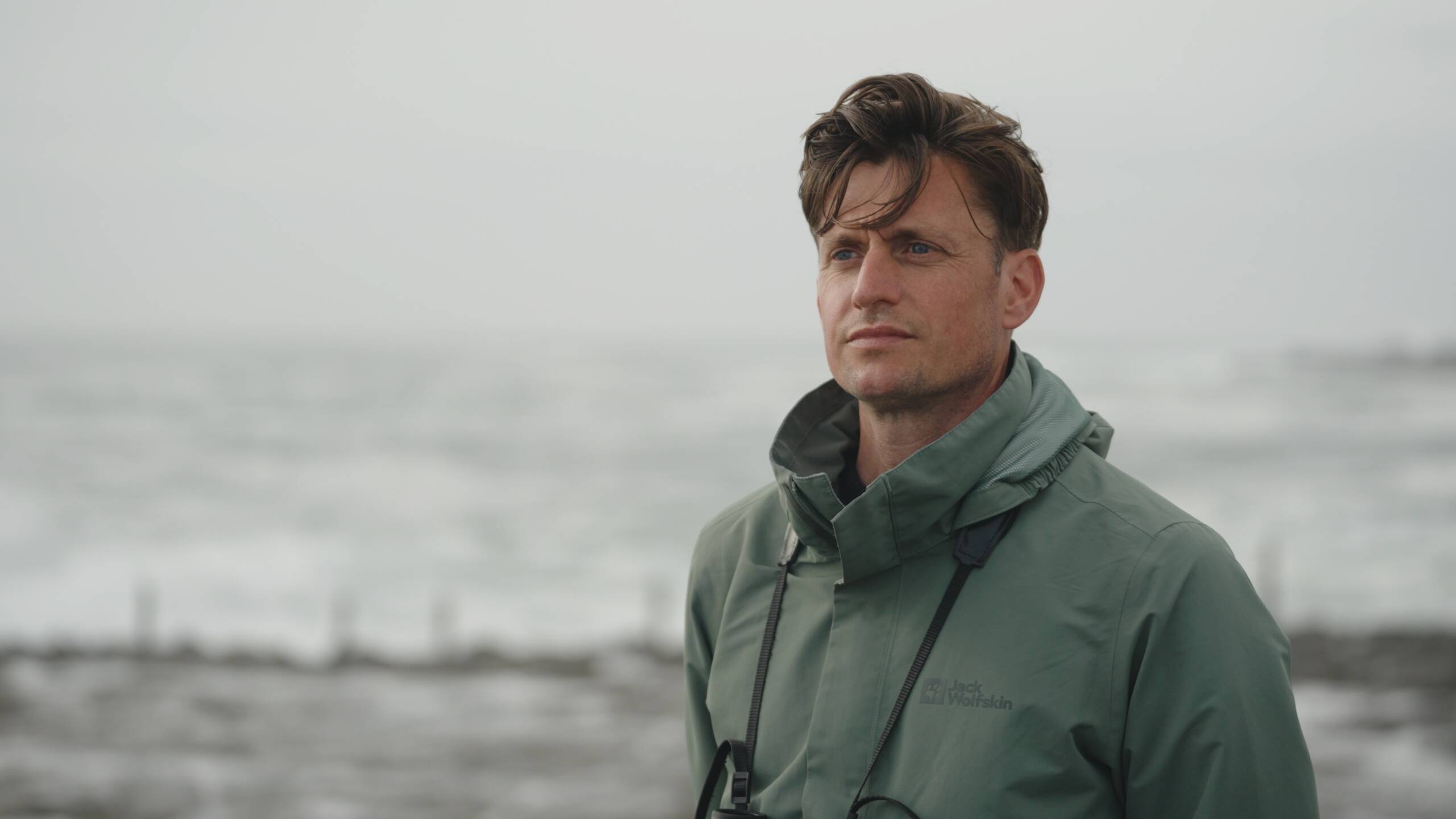
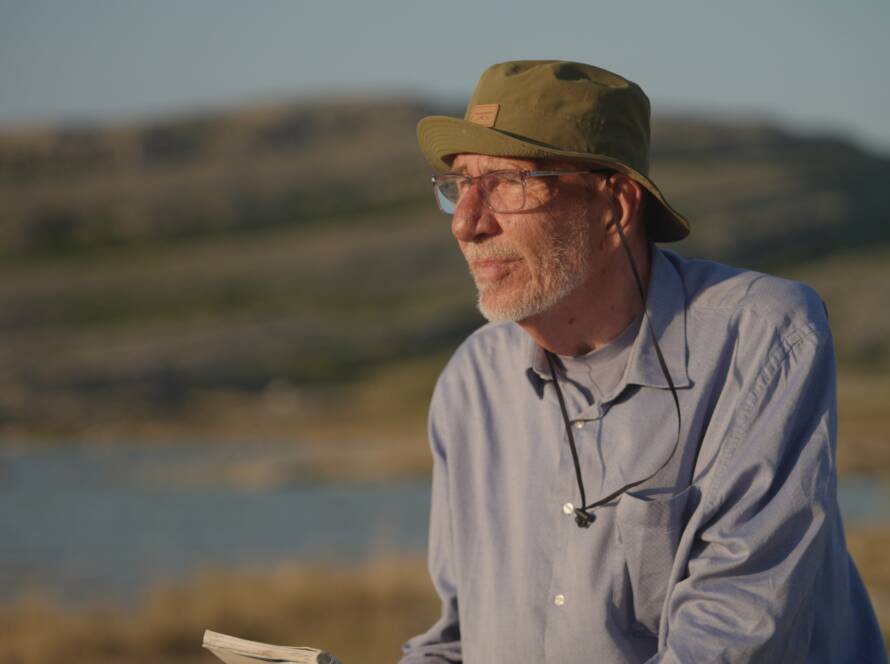
After the success of his last film, Een Gemeenschap van Leven (A Community of Life), Rik van der Linden is joining forces with eco-philosopher Matthijs Schouten again to make a film exploring the different ways we can relate to the natural world — different, at least, from the rationalist Western perspective. CarbonFix’s grant will enable Rik to develop a rich audiovisual exploration of Schouten’s work that heralds a new way to relate to ourselves as humans and the web of life of which we are a part.
1. Can you explain your project?
I’m making a documentary, Het is er al (’It’s already here’) that will be a poetic quest in search of meaning and the future of Western culture. It will be an invitation to broaden our horizons and to experience that we are a part of a web of life.
It’s based on the teachings of Matthijs Schouten, an ecophilosopher who has spent the past decades explaining the different ways in which we as humans can relate to nature, and encouraging people to shift their perspective. In Western culture, there is little room for experiences that make us feel part of the great community of life on this planet, or even all the elements in the cosmos. Our Aristotelian and Christian history led us to believe that we were the ‘rulers’ over nature rather than partners of it or participants in it, which is the perspective of many other cultures, especially indigenous ones.
In my previous film, Een Gemeenschap van Leven (A Community of Life), Matthijs and I explored the perspective of the oak processionary caterpillar, an insect we see as a pest. We explored the many inhabitants of the oak, and the tree itself came to life. The film was a surprise hit, and clips from it went viral.
Now I’m making a film that serves his rich and layered story. It’ll be an audiovisual experience that invites the viewer to explore other forms of knowledge.
2. What motivated you to make this documentary?
I deepened my relationship with nature a few years ago, and became able to look at everything with childlike wonder. I realized that our culture tends to push that sense of connection with nature away. I wanted to discover the world through a new paradigm, and bring others with me.
On my journey to make more contact with nature, I met Matthijs, who has spent much of his life talking to people about how they relate to nature and the things we take for granted in our own culture. He gave words to something I had already experienced, but the way he expressed it resonated so deeply made me think: I have to go deeper with this.
I had a period when I lived more slowly. During the pandemic, I became a father and had to adapt to the tempo of babies. Then we moved to a quieter place outside the city, and I became a member of a CSA (community-support agriculture) farm. Because of the pandemic and the lockdowns, I was forced to go out into nature and get to know the non-human world. That’s how I became aware of how big the world is.
Before that, I knew animals were alive, but I didn’t think of them as beings with souls.
3. What’s wrong with the Western world view?
When we humans encounter something in our way, we try to eliminate it. Look at the oak processionary caterpillars: we see them as a plague that we have to get rid of.
We believe that we are gods, that we can remake the world around us. But with that attitude, we have already exceeded the planet’s limits. We have burned up too many resources, and yet we
We could be richer in our wellbeing and our spirituality, and feel connected with the whole web of life.
4. Why did you want to make a film centred around Matthijs?
Matthijs has told this story for 40 years. He has refined it and polished it until it became the diamond that it is today. He elevates speaking to an art, and it touches everyone that hears it. I feel a strong need to solidify his story in the form of film because so many people are searching for a story that gives them direction.
From my last film, I shared a few clips that had been left on the cutting room floor. Those clips went viral, and they struck people so deeply. People asked: “Can I show it to my students, or at my leadership conference?”
5. Why do you think those clips touched people? Why is the time ripe for this next film?
In a disenchanted world, more and more people yearn for meaning and inspiration. Now that the living earth is dying, we are once again seeing the wonder that is inherent in life itself.
We live in a state of profound cognitive dissonance: we know so much, and yet we do nothing.
In the 1970s we became aware of the damage we were causing. I think most people have always felt, on some level, that things are finite: the consumer society, the capitalist system. We sense that the end of an era is approaching.
Some people are searching for more connection with nature. Others are doubling down on turbo-capitalism, wanting to grab as much as possible. But I think both reactions come from the same realization: an end to the world as we knew it is coming. I believe we have to do things differently and start thinking much more as a network.
6. Where are you now in the process of making the film?
We went to Ireland in June to film in de Burren to film the first chapter of the film. We’ll use this to make a teaser that conveys the feeling of the kind of film it will be to showcase the film to potential funding and strategic partners.
We’ll then film Matthijs’ story in many different settings: schools, companies, municipalities, community centres, so that for every viewer there’s an area and an audience they can identify with.
In between his story we’ll see very sensory, experiential scenes. Not primarily talking, but more from the viewer’s perspective as they try and put into practice what Matthijs talks about. These scenes will be told from a specific place that will be talking to the viewer, without human language. Through the sounds of nature and the way our characters create art from the inspiration of this place.
Once it’s in cinemas we’ll build an impact campaign around it, because the greatest impact comes from physical screenings, people experiencing the same story together and talking about it.
7. What does CarbonFix’s grant make possible?
It allows us to really take the time, together with musicians, sound designers, and cinematographers, to slowly absorb Matthijs’s story and figure out which form best serves it. That wouldn’t have been possible without CarbonFix’s support.
Usually I’d go looking for funding when a plan was locked down. But having a development budget to allow us to put in the time and care the process needs helps enormously.
8. This isn’t really a climate film in the conventional sense, but more of a cultural or philosophical intervention. How do you see the connection between inner transformation and concrete environmental action?
There’s a huge difference between changing the world because you have to, and changing the world because you want to. What this film needs to show is that it’s deeply fulfilling and meaningful to be aware that everything you do matters. That you can choose the kind of energy you bring into the world. And when something clicks on the inside, it translates outward.
Societal change is large and slow: our way of thinking is the result of 2,000 years of culture. But individual change can happen very quickly: one experience, one insight, one story someone tells. That’s where my focus lies. If you reach enough individuals, society changes too.
As Matthijs says: “I draw hope from the fact that a new story is emerging… that tells us we are not separate from the world around us, but part of a vast community of life sustained by a planet that offers us a home. A story of partnership and connectedness. This not only reflects reality, but in experiencing it, we also find meaning and well-being.”
9. Can you give some detail of what the film will look like?
In the documentary, we see Matthijs tell each chapter of his story in a different location, with different audiences, from congress halls to community centers. In this way, we also give the viewer the chance to savor his narrative, ensuring there is an arena or an audience for every viewer with whom they can identify.
We’ll then also film scenes of people who changed their lives after being touched by the story of Matthijs, and who are deeply formed by a specific landscape. Their stories will make a narrative mosaic: there’ll be a chapter of Matthijs’s story, then a scene in which seemingly independent characters take center stage, but which you increasingly begin to feel are the cobwebs of a wondrous web together.
Another storyline in the film will be about the quest to cultivate the connection with life and what that yields. I want to break open my own cultural baggage: the rational Western baggage. What can I learn by engaging with lessons that expand my mind: I don’t know what lessons this will lead to, but I’m curious.
Matthijs’s story should be an invitation to start working from other forms of knowing. Right now we do everything with that 10% of our prefrontal cortex, but there is so much more knowledge in our brains and our bodies. If we tap into that knowledge, we become richer human beings.
The film will be out in 2028, with many community viewing organised. We are looking for partners and co-investors to change the story that drives us. Interested? Shoot him a mail at rik@firmafilm.nl. See updates on his LinkedIn here.