

Bloomineral
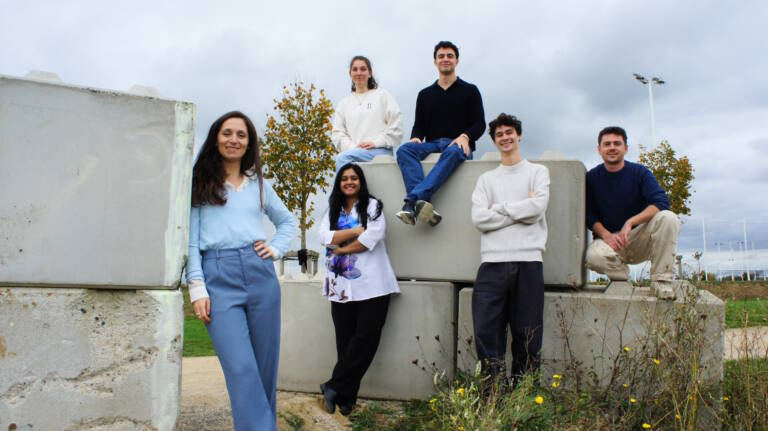
CarbonFix cohort
Type
Founders
Type of impact
Type of invention
About this project
Bloomineral are on a mission to transform materials in the built environment and our daily lives into carbon sinks. They are harnessing the power of photosynthesis and biomineralization to turn atmospheric CO2 into ultra-pure calcium carbonate crystals that can be used in cement, construction materials, paint, and polymers.
By feeding macroalgae in seawater with industrial alkaline waste and CO2 sourced from industrial emissions and the atmosphere, Bloomineral have found a way to mineralize CO2 into a hardened rock at ambient temperatures without high temperature or pressure.
Their method spans carbon capture, carbon storage, and waste utilization. They also reduce carbon emissions by producing a material that can replace high-carbon materials.
Bloomineral aims to remove 250 million tons of CO2 annually, while displacing an additional 300 million tons of carbon dioxide emissions by replacing high-carbon materials like cement. A third benefit is that if their white carbonate materials were used in building facades and roofs, it would reflect light and reduce urban temperatures by up to 4 degrees.
Founder Q & A
Q: Why is your methodology important for climate change?
Mineralization is vital for climate mitigation because we have to permanently store CO2 to stabilise the climate. There’s only two options for storage: underground, or in materials. We’ve gone for the latter because we believe storing it in materials is the most economically feasible way to store CO2. We need CO2 removal without having to pay for CO2 removal, nor its storage..! And that’s exactly the promise of carbon negative materials. We get revenue from selling the minerals and that pays for the removal and storage.
Q: What’s your vision?
We want to be able to scale biomineralization to achieve three key impacts. First, we aim to remove 250 million tons of CO2 annually. Secondly, we can displace an additional 300 million tons of carbon dioxide emissions by replacing high-carbon materials like cement. We could also replace harmful materials such as titanium dioxide.
Thirdly, our white carbonate materials can be used to construct buildings, help cities adapt to rising temperatures by reflecting heat and reducing urban temperatures by up to 4 degrees.
Read the full interview with Caroline Thaler here.