

Sixteen44
CarbonFix cohort
Type
Founders
Type of impact
Type of invention
About this project
Sixteen44 has developed a compact reactor that can capture and oxidize methane at low concentrations at a fraction of the energy consumption and the size of competitors.
Methane drives around 30% of global warming, and yet most of it goes unaddressed because it’s so difficult to capture at low concentrations or oxidize at ambient conditions.
That means that the 60%+ of global methane emissions from agriculture and landfills are released into the air. Existing solutions are either hugely energy-intensive or rely on very high-temperature catalysts.
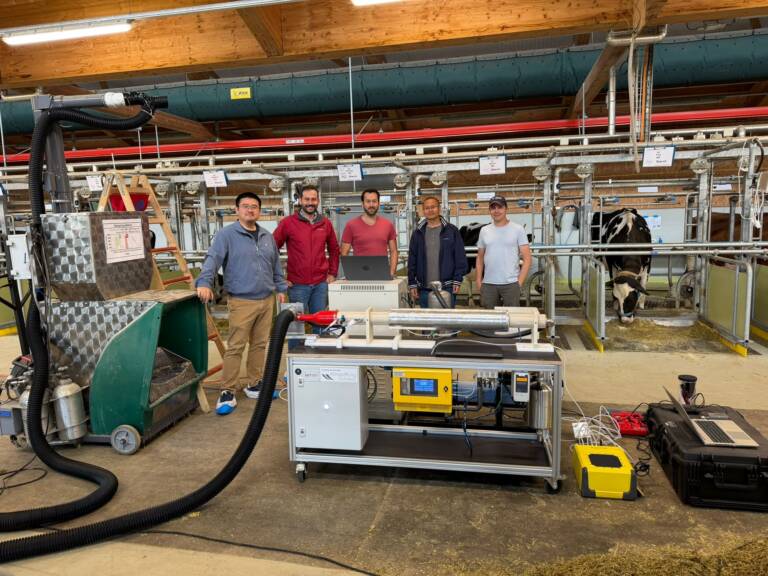
Sixteen44, however, have developed a compact reactor that can oxidize methane at ambient conditions and convert it into CO2 and water via plasma and catalysts. They have tested their concept at a Swiss dairy and were able to remove 60-70% of atmospheric methane that was produced from the cows. They’re now looking for a long-term deployment.
Read the full Q&A here.
Founder Q & A
Q: What’s different about your approach compared to competitors?
Mario: The problem with methane is that all the emissions below a concentration of 5% are simply not addressed. That means all the methane that’s not oil and gas-related.
And that is a significant amount of methane: the methane from agriculture and landfills is about 60% of total methane emissions.
There are a few technologies to remove low-concentration methane, but they usually require significant amounts of energy to destroy that methane. For example: they heat it up to 600°C, or use a catalyst and then to heat it to 450°C.
By contrast, the catalyst we’ve developed only requires 40-100°C, one order of magnitude lower! Our device is also 99% more compact than alternatives that use chlorine to break down methane.
The other big benefit of our process is that we can address methane from cows without touching the cow. Until now, the only options were giving additives for cows to reduce the methane in their burps, but these make the cows produce less milk. Likewise, rice paddies are a big agricultural source of methane, and you can dry the soil out periodically to cut methane production, but that’s just a workaround and can affect crop yield..
Our technology allows us to go to landfill where methane is just seeping out of the ground. It allows us to go to wastewater treatment plants. Our tech opens up a whole field that isn’t explored.